
Montemarsale Colle di Santa Lucia
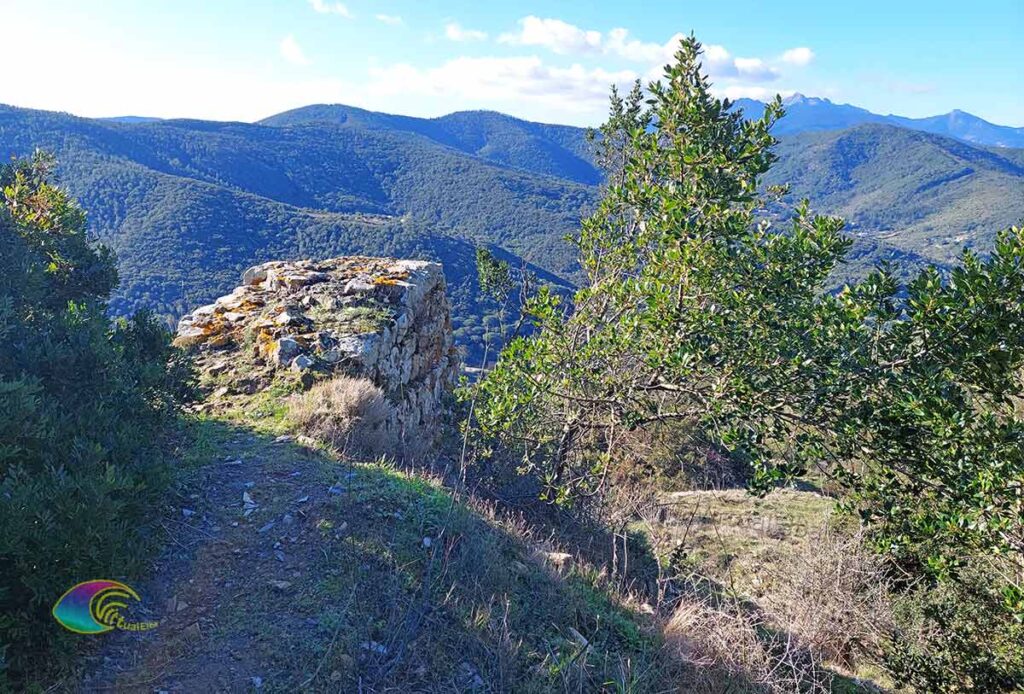
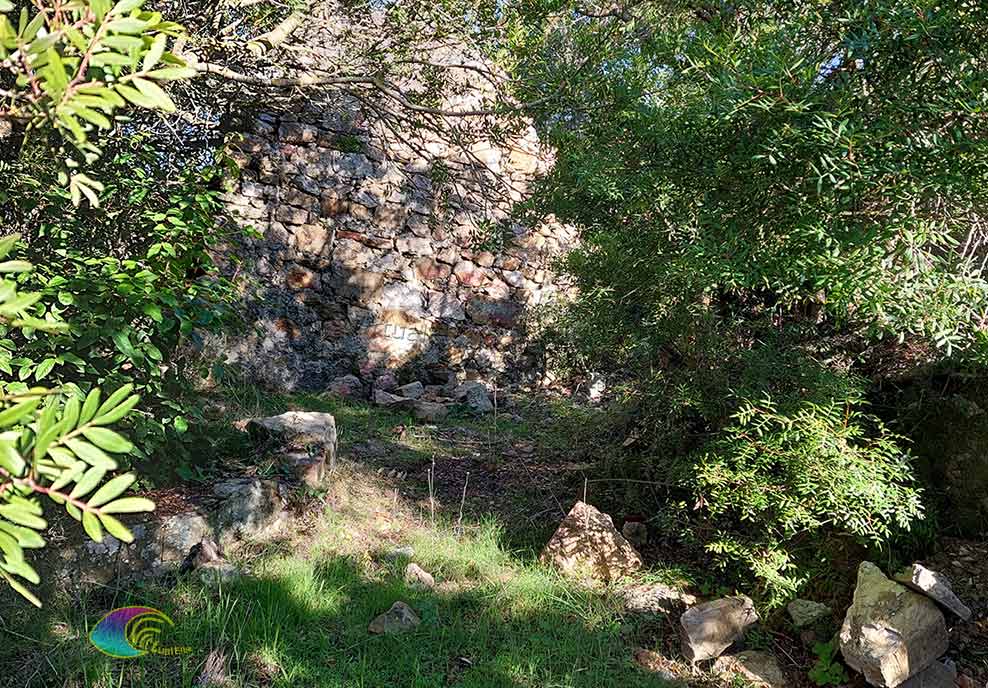
Montemarsale, stood on the current Colle di Santa Lucia (a hill (237 m) overlooking the Gulf of Portoferraio. The top of the hill is almost perfectly leveled and entirely surrounded by mighty walls of variable width between 1 and 1.50 meters, with the typical medieval construction technique in cemented stone drafts.

On the surface there are fragments of pottery from Pisa in archaic majolica painted in green (copper oxide) and brown (manganese oxide), of a production dated between 1220 and 1350; and again, a large quantity of marine shells of the genera Cardium and Murex.
Montemarsale medieval village
Montemarsale was the only medieval fortified village (“castrum”) on the island of Elba, attested between the 13th and 14th centuries. Its name derives from «marsa», that is a «marshy place» identifiable with the underlying Piano di San Giovanni ( Portoferraio ).
Montemarsale was surrounded by a wall built by the Republic of Pisa around 1298. The base of a cylindrical tower, on which a modern iron cross stands, is visible in the eastern sector. In 1305 Montemarsale was the head of one of the “capitanìe” of the island, administrative districts of the Republic of Pisa. In 1345 it was inhabited only by 12 families, 6 of which engaged in defense and maintenance, who complained about the unfavorable position of Montemarsale and the unhealthy air of the marsh below.
Church of Santa Lucia

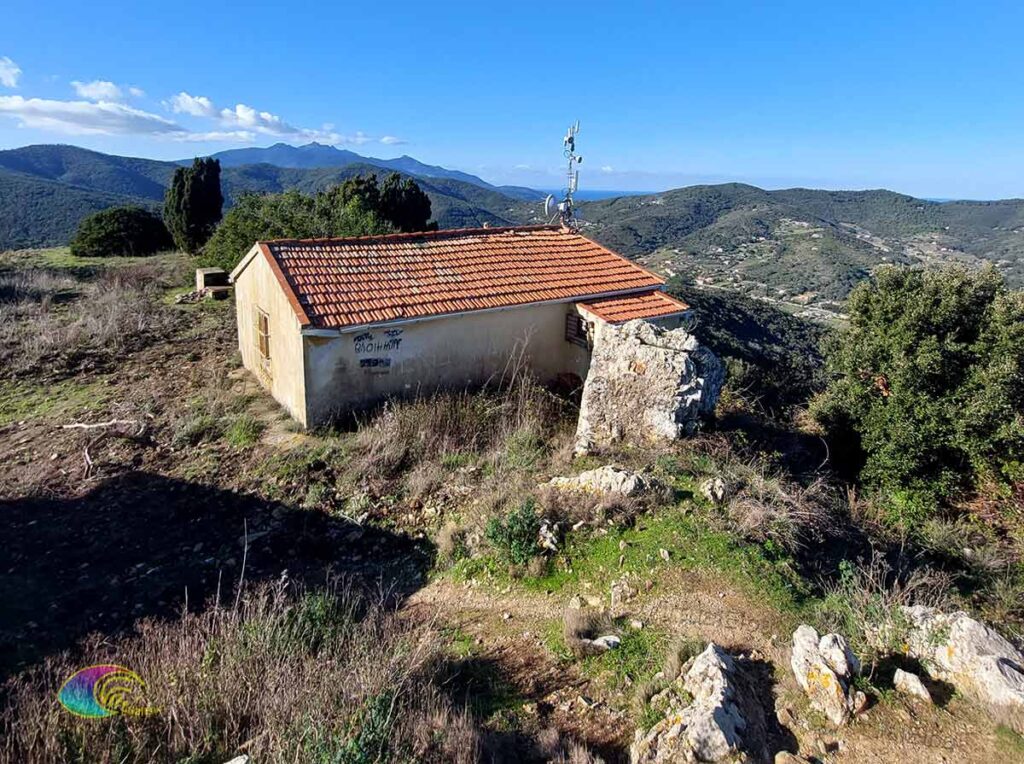
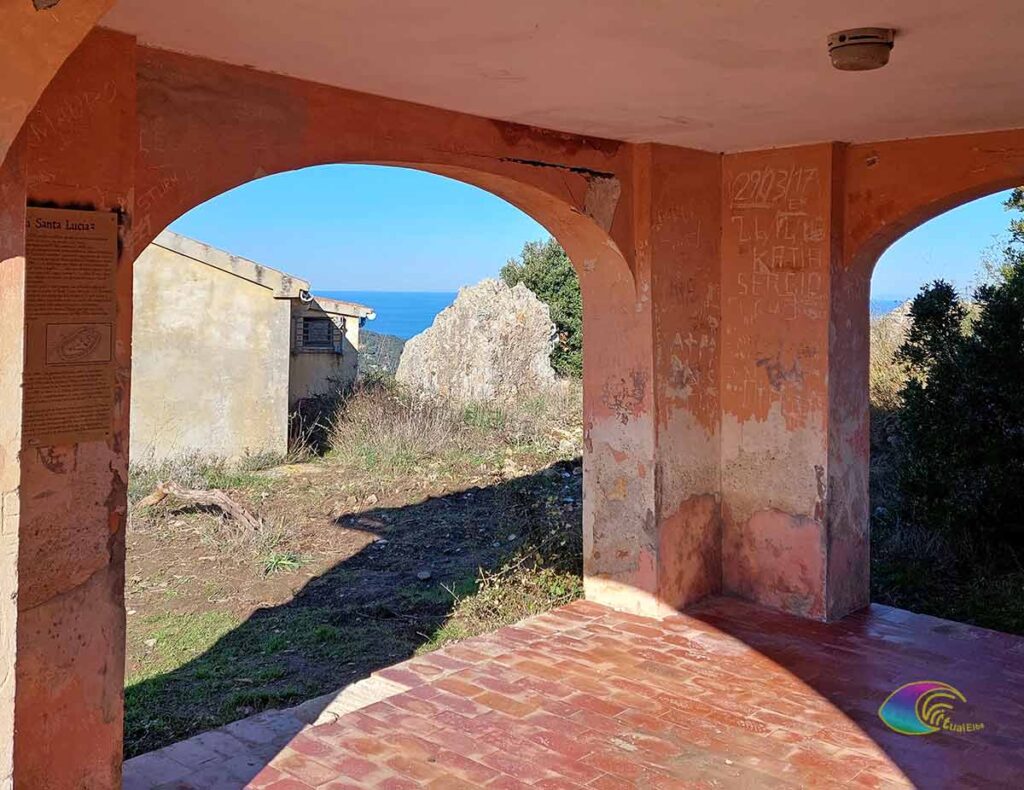
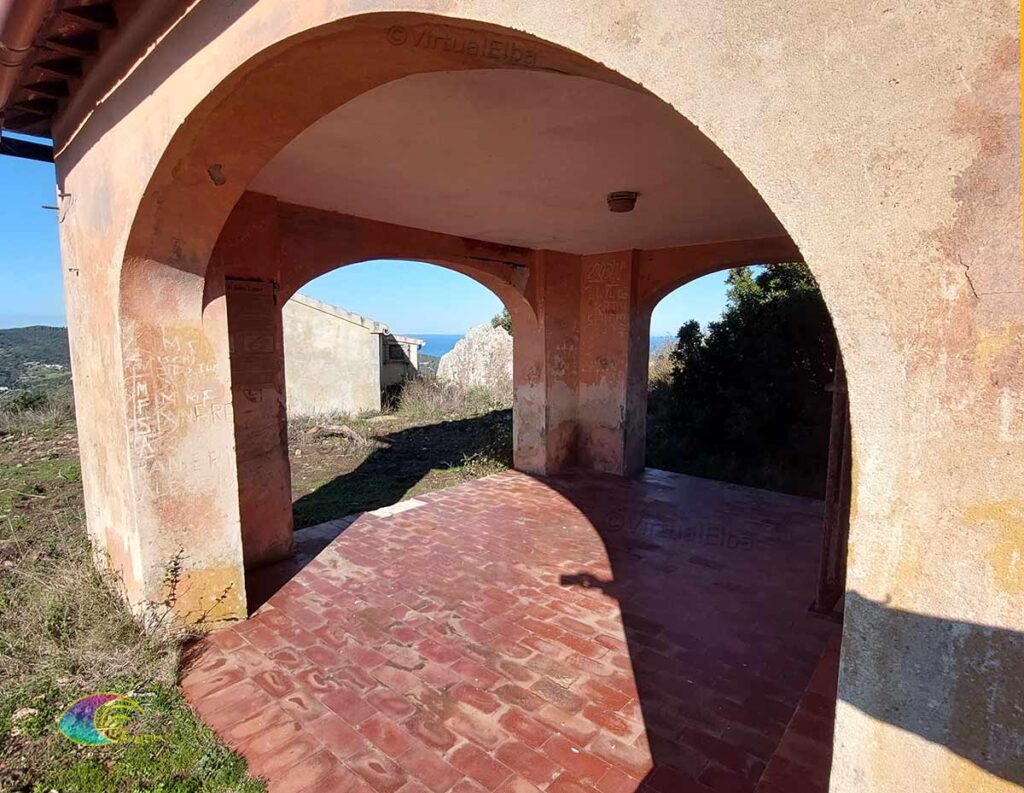
In the 17th century the small Church of Santa Lucia was built, with a small hermitage that fell into disuse in 1776 following an edict of the Grand Duchy of Tuscany. The ruins of Montemarsale were identified by scholars of the eighteenth century as belonging to a legendary fortress of Lucèri, never mentioned in medieval documents.
The Fortress of Montemarsale
Montemarsale starting from the years of the presumed date of its fortification 1298 will always be qualified in documents as castrum, that is, as a fortified village ; the mighty walls, in some cases almost 6 meters high and much more imposing on the side facing the sea, crowned the flat top on which stood a cylindrical tower of which today only the base remains.









Volterraio Castle and the Montemarsale Fortress
In 1305 the Municipality of Pisa appointed the two castellans in charge of the armed defense of Montemarsale and Monte Veltraio; for Montemarsale the castellan Ugoni, while Dotto Masche was the custodian of Volterraio.
The Fortress of Montemarsale was connected with the Castle of Volterraio through visual signals according to a well-known medieval use of hints: diurnal (smoke) and nocturnal (fire).
“From 1303 to 1314 (…) the administration of the island was entrusted to two distinct officers, one of whom retains the title of Captain of Elba, but in fact exercises his authority only in the Municipalities of Capoliveri and Campo , from the first of which, indeed, sometimes it took its name; the other, with the title of Captain of Montemarsale, changed shortly after to that of Captain of Gràssula, administers the Municipalities removed from the jurisdiction of the former, and does not depend on it in any way. “
The only fortified village on Elba
In a petition of 1345 written by the Montemarsalesi to the Anziani of Pisa, we read that Montemarsale was precisely the only fortified village of Elba («… in ynsula Ylbe non est aliquod castrum muratum nisi castrum Montismarsalis… » ) and its population consisted of only 12 families, 6 of which constantly engaged in the custody of the town.
The only condition to avoid depopulation would have been, according to the inhabitants, the tax relief.
In the same document, however, we also read that the village was becoming depopulated due to the unfavorable position and the malaria that infested the underlying San Giovanni swamp. For this reason, therefore, the Montemarsalesi invited the government of Pisa to want to grant again a “… immunitas generalis …” from taxes. Three years later, in 1348, the population of Montemarsale did not have to remain unscathed from the epidemic of bubonic plague that struck the whole of Europe, since, as stated in the decrees of the Pisan Senate, the people of Elba were dramatically decimated due to the disease transmitted by rats.
The name of one of the oldest Montemarsalesi, the mayor Lotteringo, is derived from a parchment dated October 26, 1234, while Donato Bandini, Bonavere Ildini and the consul Ansalotto are known from archiepiscopal deeds of 1263, 1267 and 1278.
The destruction of Montemarsale
The life of Montemarsale continued to unfold throughout the fourteenth century and perhaps for a good part of the fifteenth century, as evidenced by past finds of coins; a bronze ring with a Frederick’s effigy dates back to the thirteenth century.
The destruction of the village took place in June 1544 at the hands of Khayr al Din Barbarossa, as evidenced by the sectors of the walls that collapsed on the surrounding land.
The Community of Montemarsale
Aerial view from the Colle of Santa Lucia – Montemarsale
How to reach the ruins of the fortified village of Elba
To reach Montemarsale, we have to travel 1 km of dirt road that from Colle Reciso leads to the square below Colle di Santa Lucia (237m above sea level). From the square we must continue following a path for about 400 m.
Colle Reciso is the hill of passage on the road that connects Portoferraio with Lacona , easily identifiable for the Cava, “Colle Reciso quarry”.